Back to News
Specifications and Standards organizes a workshop on mandatory technical instructions No. (82-2019) for asphalt mixtures
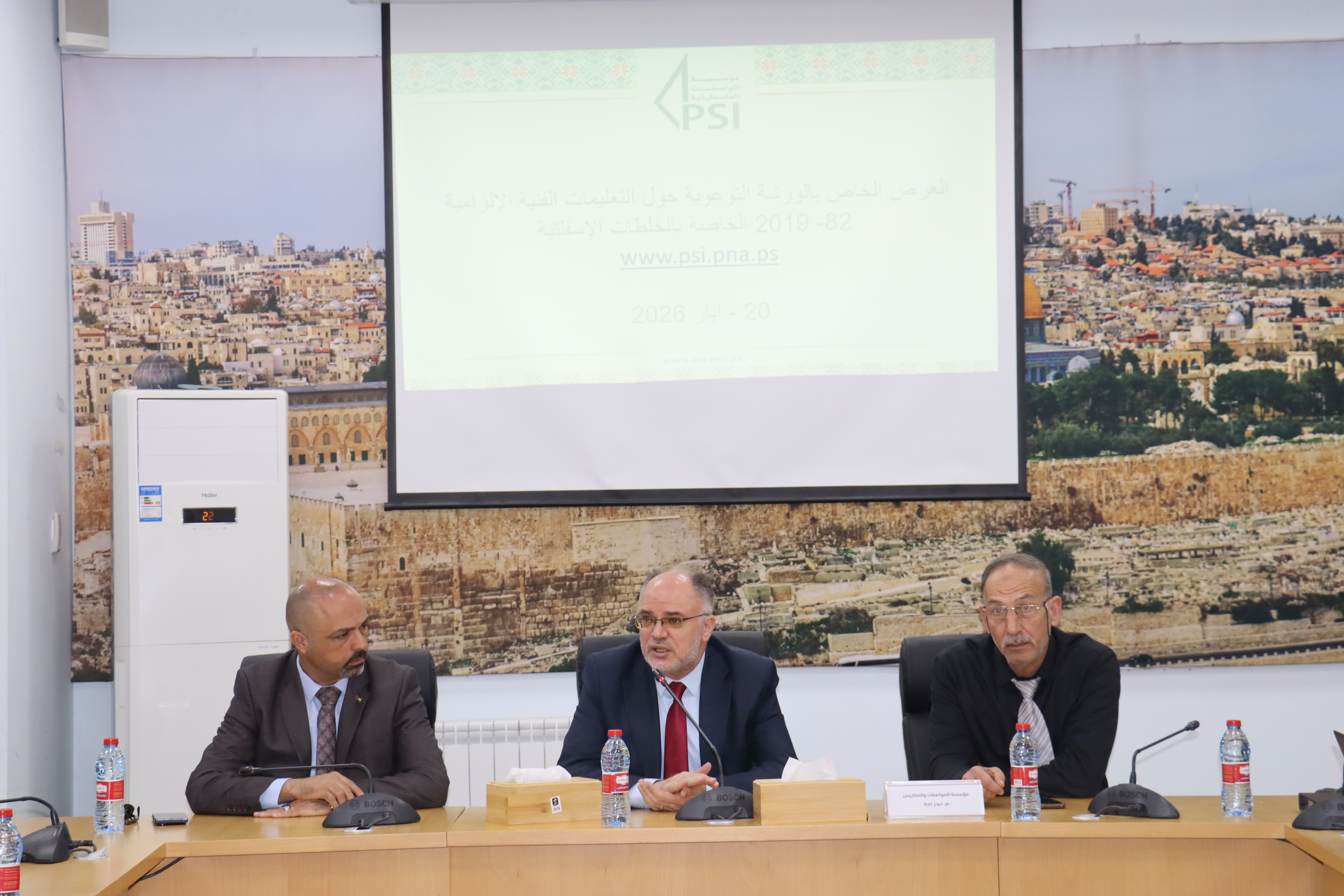
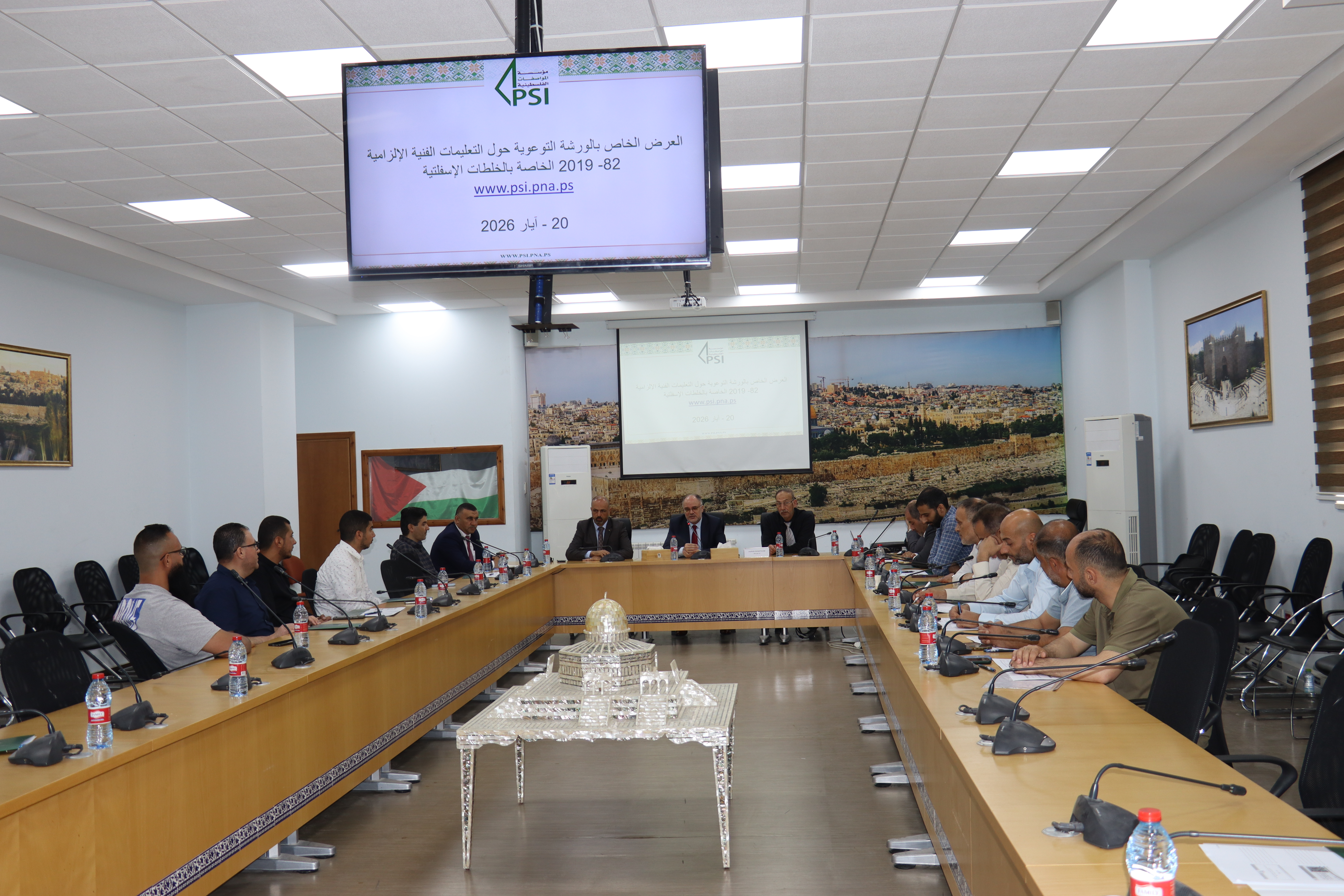
The Palestinian Standards Institution (PSI) organized a specialized workshop on mandatory technical instructions No. (82-2019) for asphalt mixtures, with the participation of representatives from relevant authorities, the contracting sector, and specialized technical bodies. This workshop was part of the institution's efforts to enhance the quality of infrastructure and improve the efficiency of the roads sector in
In his opening remarks, the Director General of the Palestinian Standards Institution, Dr. Haider Hajja, affirmed that this workshop comes within the institution's directions aimed at spreading technical awareness of mandatory instructions and approved Palestinian standards, which contributes to improving the quality of road projects and ensuring their implementation according to the best technical and engineering standards. He explained that compliance with technical specifications and instructions constitutes a fundamental pillar in enhancing public safety, raising the efficiency of infrastructure, and extending the operational life of roads, stressing the institution's keenness to strengthen partnership with various relevant parties to ensure the optimal application of specifications.
For his part, Dr. Ahmed Al-Qadi, President of the Palestinian Contractors Union, emphasized the importance of these technical workshops in developing the capabilities of workers in the construction and contracting sector. He pointed out that standardizing technical procedures and adhering to approved specifications contribute to improving the quality and efficiency of implemented projects, which positively impacts the roads and infrastructure sector in Palestine.

Dr. Ahmed Ibrahim explained that the mandatory technical instructions No. (82-2019) concerning asphalt mixtures, issued under the Standards and Metrology Law, obligate workers in this sector to comply with all technical requirements related to the design, production, transportation, and implementation phases, including paving and compaction work. This ensures the quality of asphalt mixtures and the efficient implementation of road projects according to national standards.
During the workshop, Engineer Al-Harith Hadidi presented an explanation of the Palestinian standard “MP 48” for mineral aggregates from natural sources. This standard specifies the technical requirements for aggregates used in asphalt mixes. He clarified the properties that must be present to ensure the quality and performance of pavement layers, including appropriate particle size distribution, resistance to erosion and abrasion, cleanliness of the aggregate and its freedom from clay and impurities, as well as absorption and durability rates. He pointed out that this standard aims to ensure the production of asphalt mixes with high resistance to loads and weathering, thus contributing to improved road efficiency and extended service life.
Engineer Fadi Jallad also reviewed the Palestinian specification series “MF 171” for hot asphalt mixes, which consists of three main parts. The first part dealt with the requirements for the components and design of hot asphalt mixes prepared for roads, flight paths, paved areas and pedestrian sidewalks according to the Marshall method. The second part dealt with the requirements for producing hot asphalt mixes and the mechanisms for transporting them to work sites. The third part focused on the requirements for carrying out spreading and compaction work at work sites according to the approved technical principles.
Engineer Ahmed Amayreh also provided a detailed explanation of the requirements for obtaining the Palestinian Quality Certificate for asphalt plants, along with a full explanation of the quality management system for asphalt plants according to Palestinian Standard No. (341).
In conclusion, the attendees discussed the importance of adhering to mandatory technical instructions and Palestinian specifications for asphalt mixes, considering it a fundamental factor in improving the quality of road and infrastructure projects in Palestine. The workshop also reflected the commitment of official bodies and the private sector to strengthening cooperation and exchanging technical expertise to ensure the standardization of procedures and criteria adopted at all stages of road project implementation. The technical presentations clarified the requirements related to the design, production, and implementation of asphalt mixes, and highlighted the importance of applying quality management systems in asphalt plants to guarantee the highest levels of efficiency, safety, and sustainability in the roads sector.
Recommendations:

Strengthen technical oversight of asphalt plants and road project sites to ensure compliance with approved technical specifications and instructions; intensify specialized workshops and training courses for workers in the contracting and road construction sector to enhance their technical and engineering skills; encourage asphalt plants to implement quality management systems and obtain Palestinian quality certification according to specifications.
The approved, enhancing coordination and cooperation between the Standards and Metrology Organization and government agencies and the private sector to ensure the standardization of technical work procedures, continuing to update technical specifications and instructions to keep pace with modern developments in the field of road construction and infrastructure improvement, raising awareness of the importance of using materials that conform to specifications due to their direct impact on road quality and extending their operational life.
No Videos
No videos available for this news item